

With ART AT THE MEUSE, Z33 and RLKM are enriching the Maas Valley River Park with contemporary art. Discover the six unique artworks in Dilsen-Stokkem, Kinrooi, Lanaken, Maaseik and Maasmechelen. read more
Germaine Kruip
Reflection
Maasmechelen, 50.994903, 5.760744
A poetic and audible tribute to the long-lost ferry between Meeswijk and Urmond (NL).

Until the 1950s, a ferry crossed between Meeswijk and Urmond at the very spot where the sculpture now stands. The Meuse was both a natural border and a cultural bridge between Belgium and the Netherlands. Residents of the Meuse Valley shared a common history, dialect, and traditions. The vanished ferry is therefore not only a practical but also a symbolic starting point for Kruip’s work.
Connected to the landscape, attuned to the site
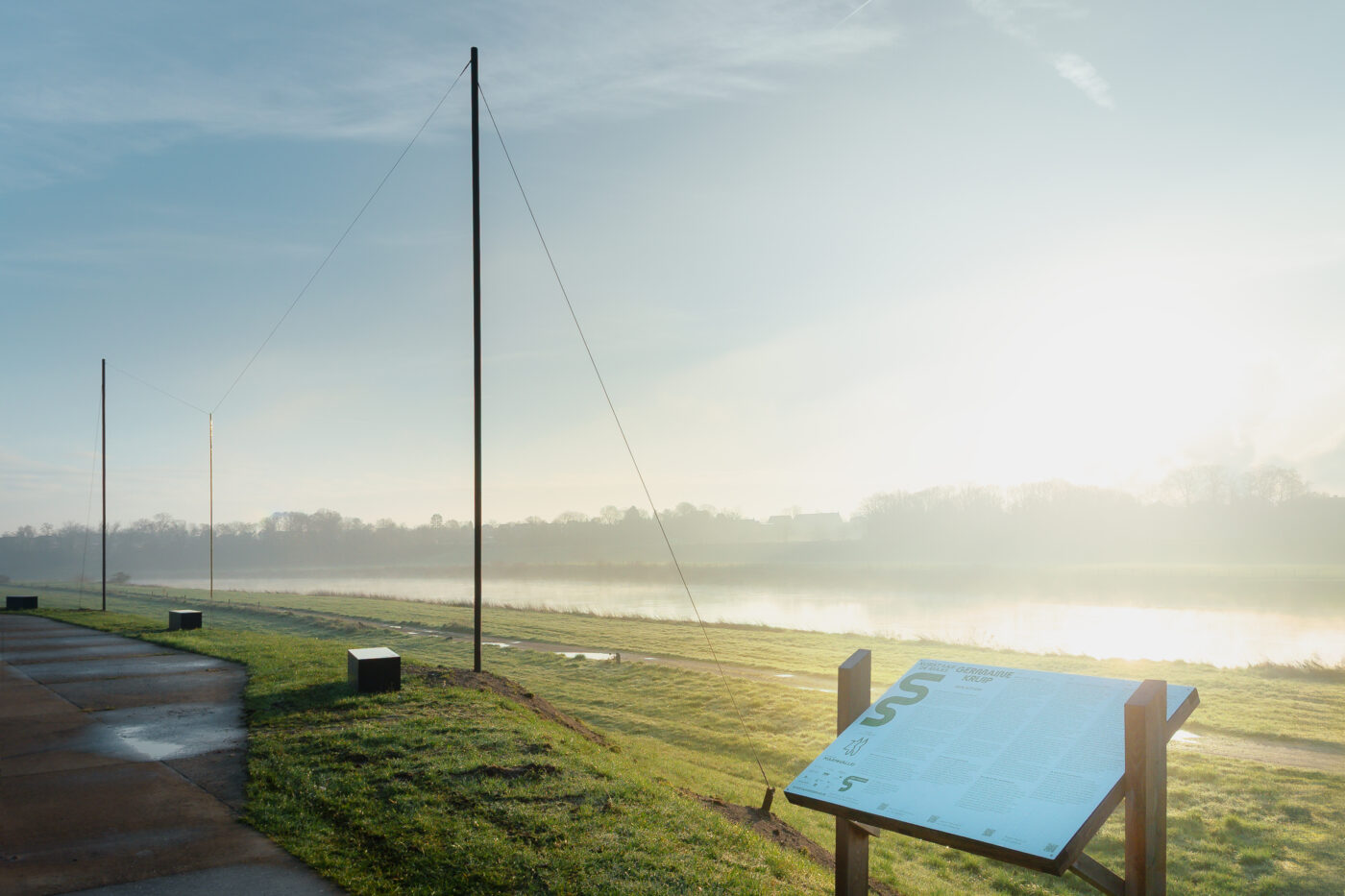
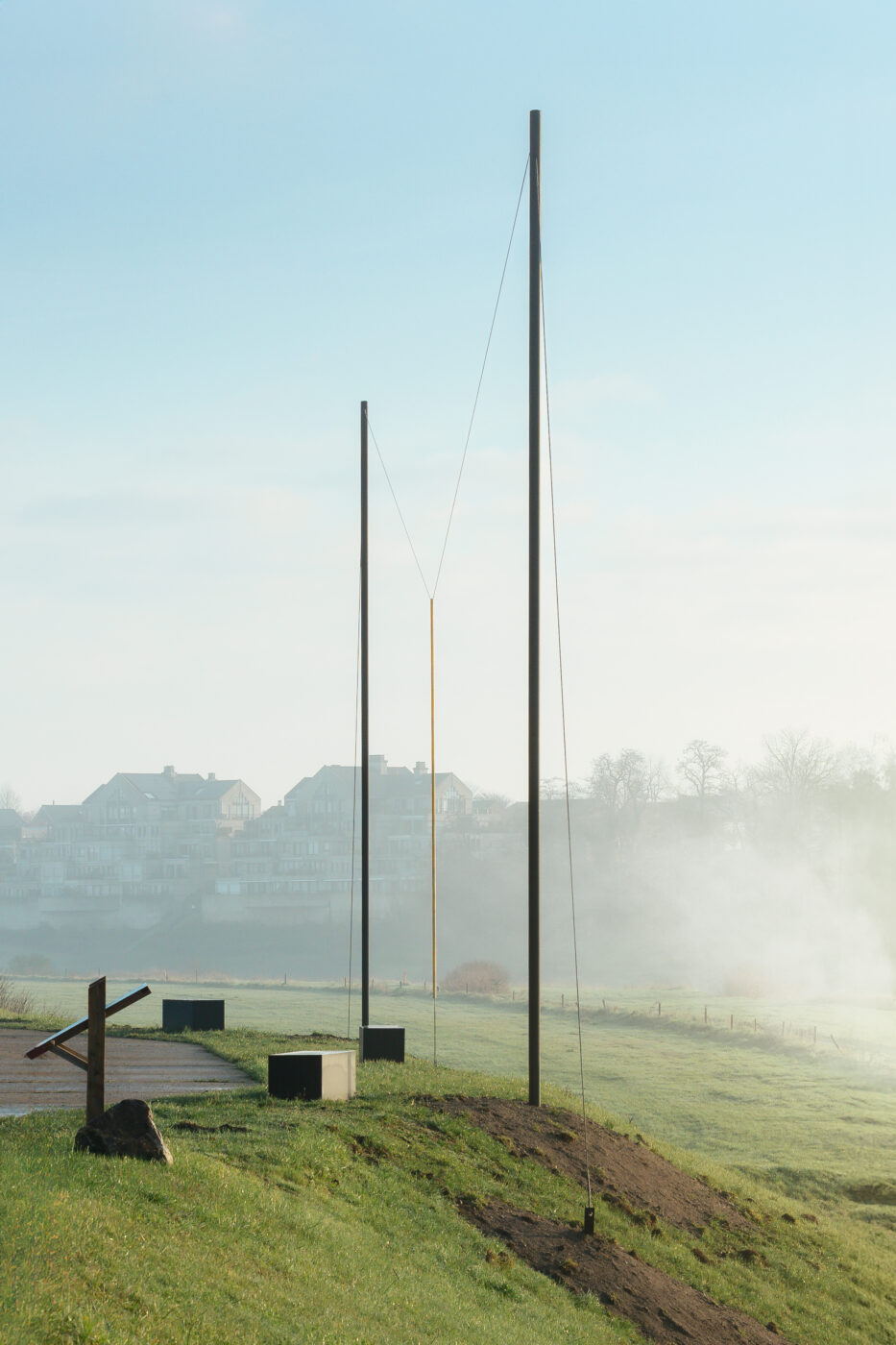
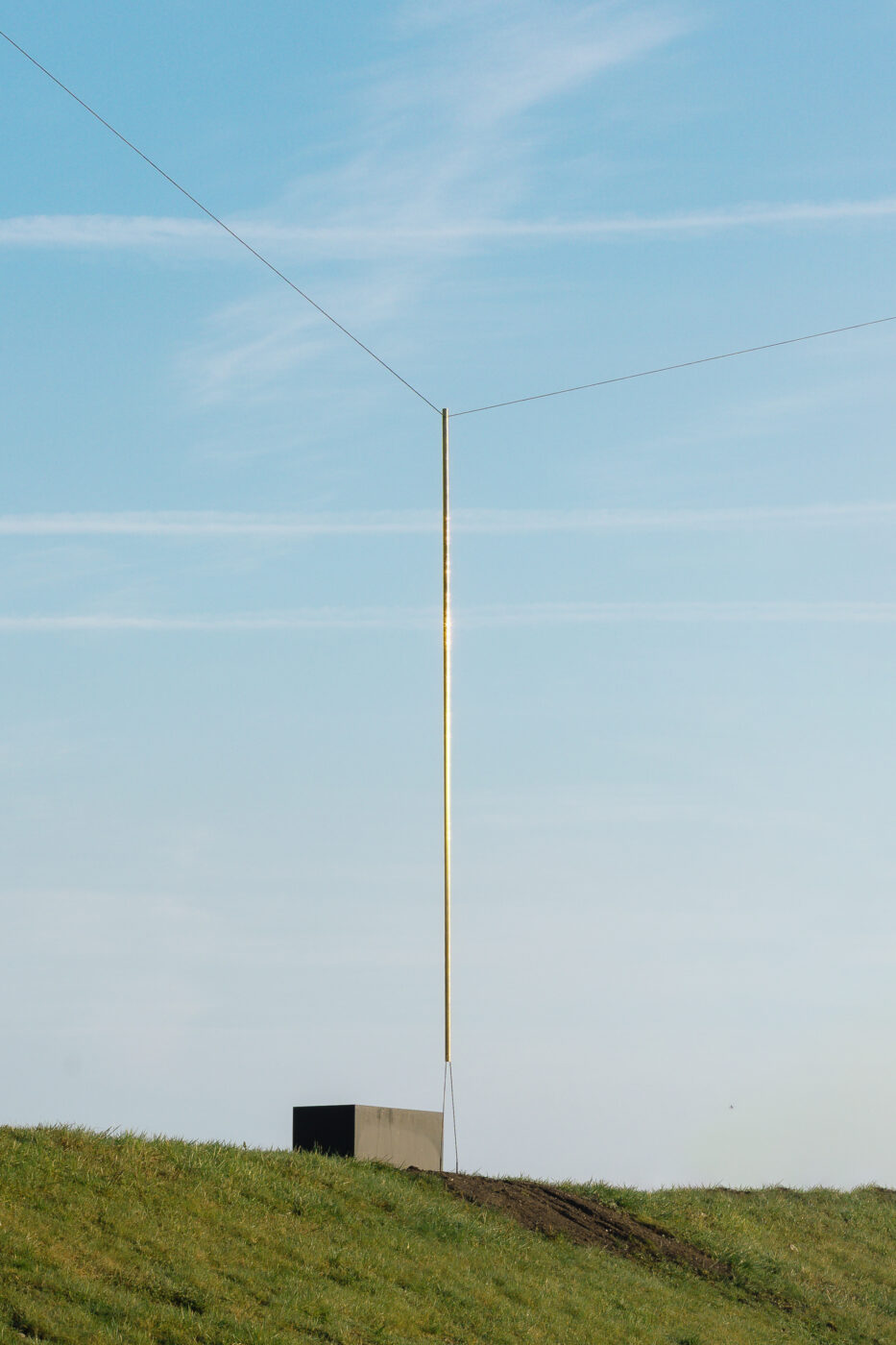
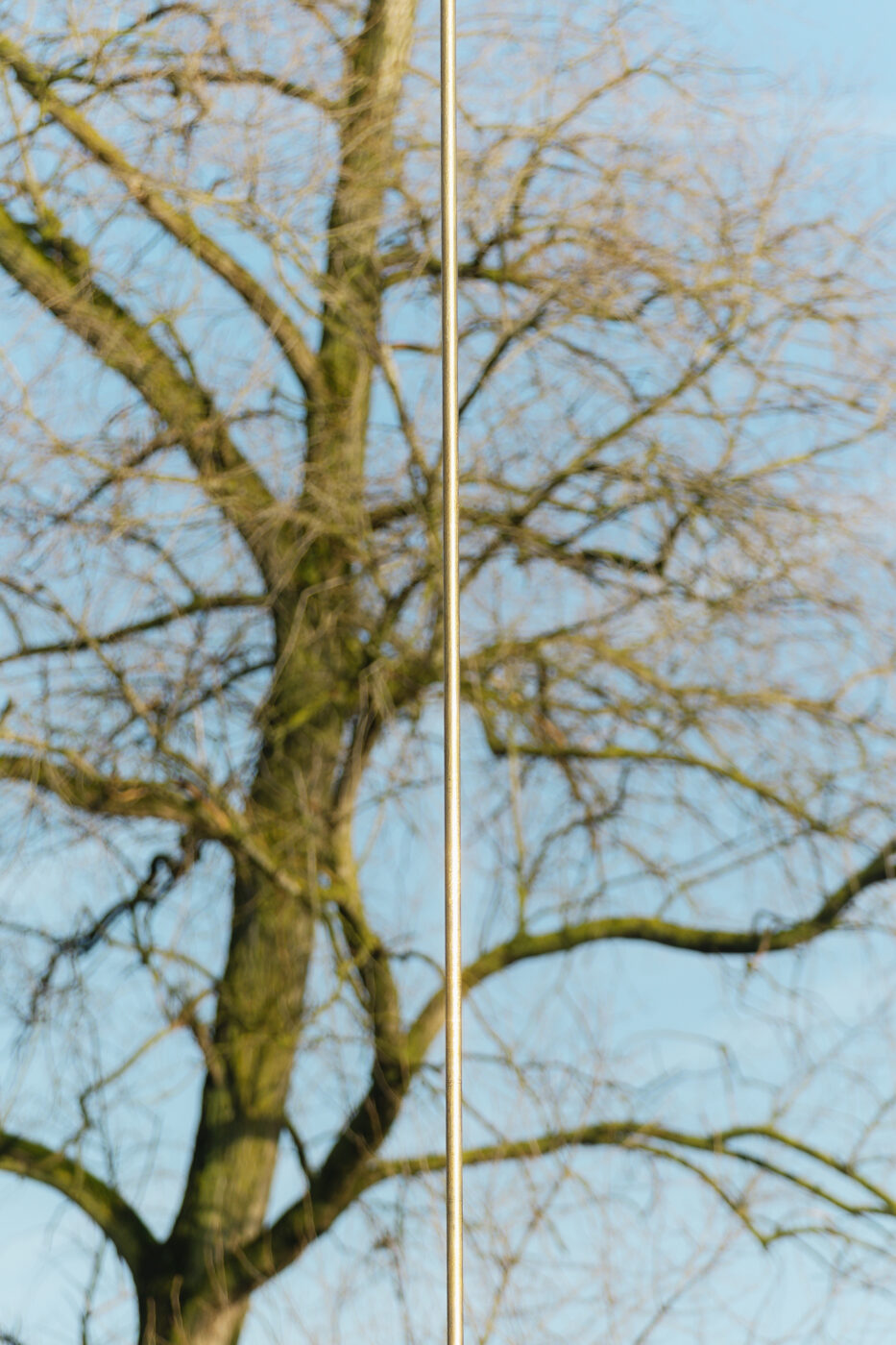
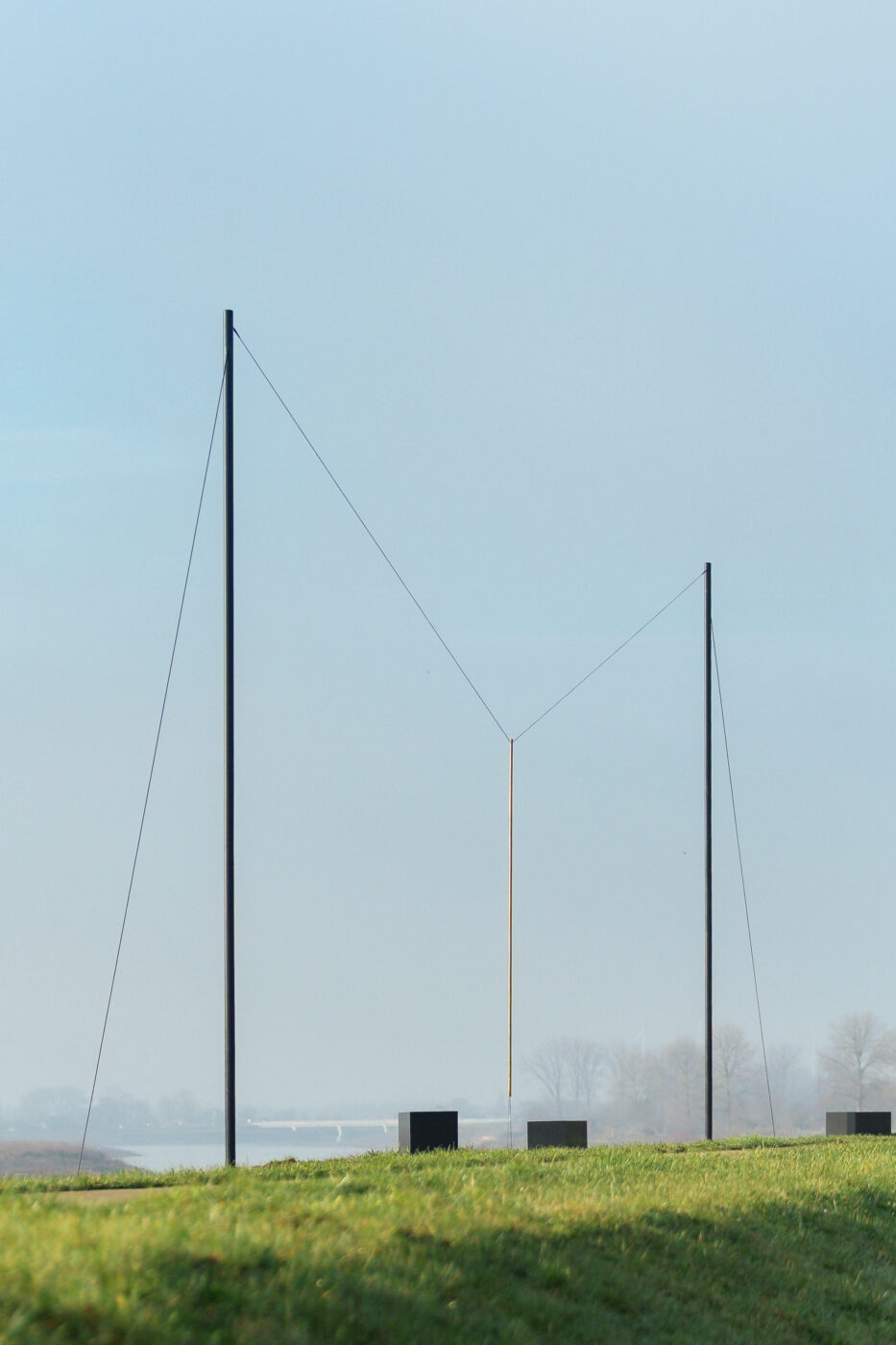
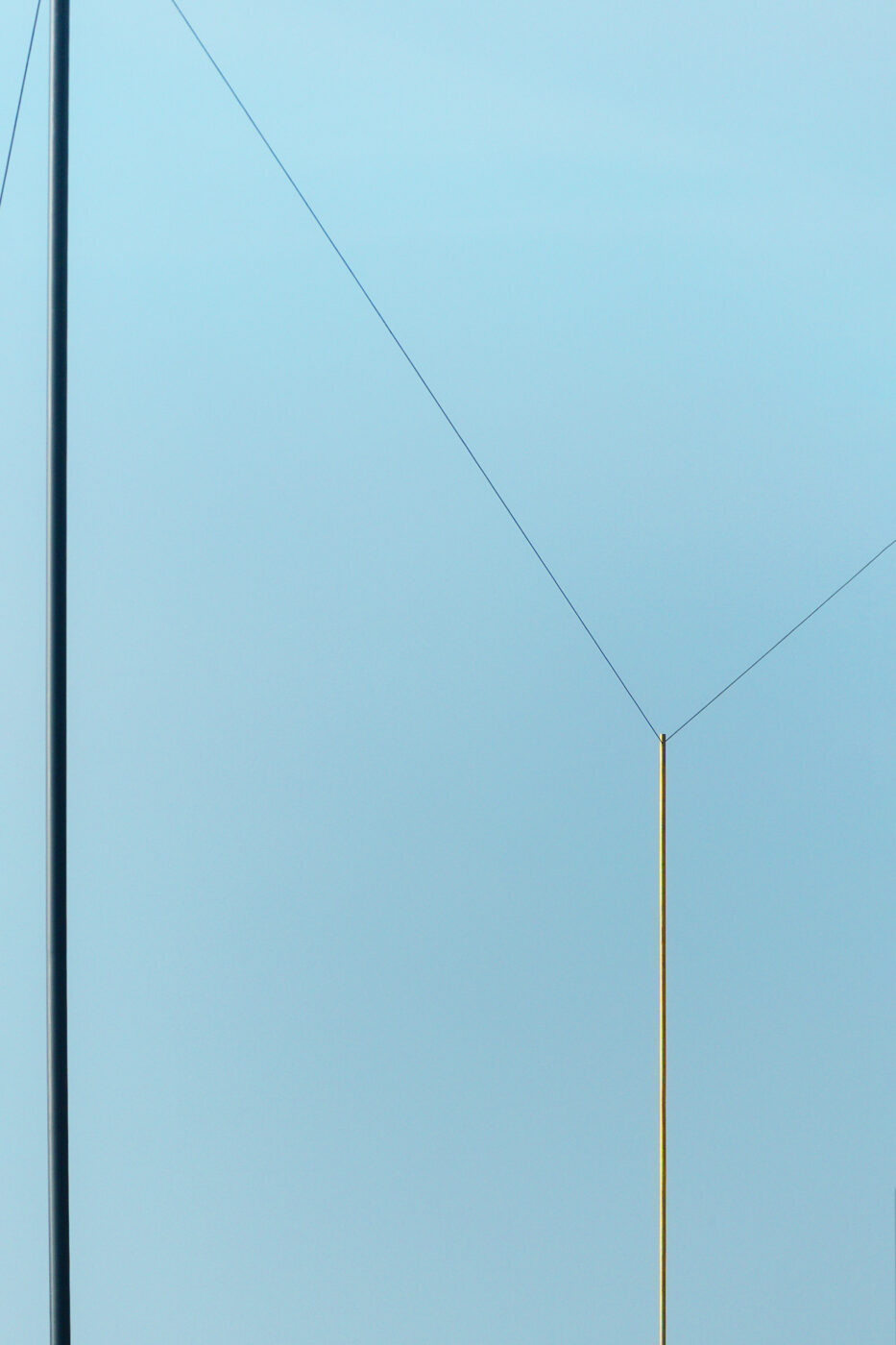
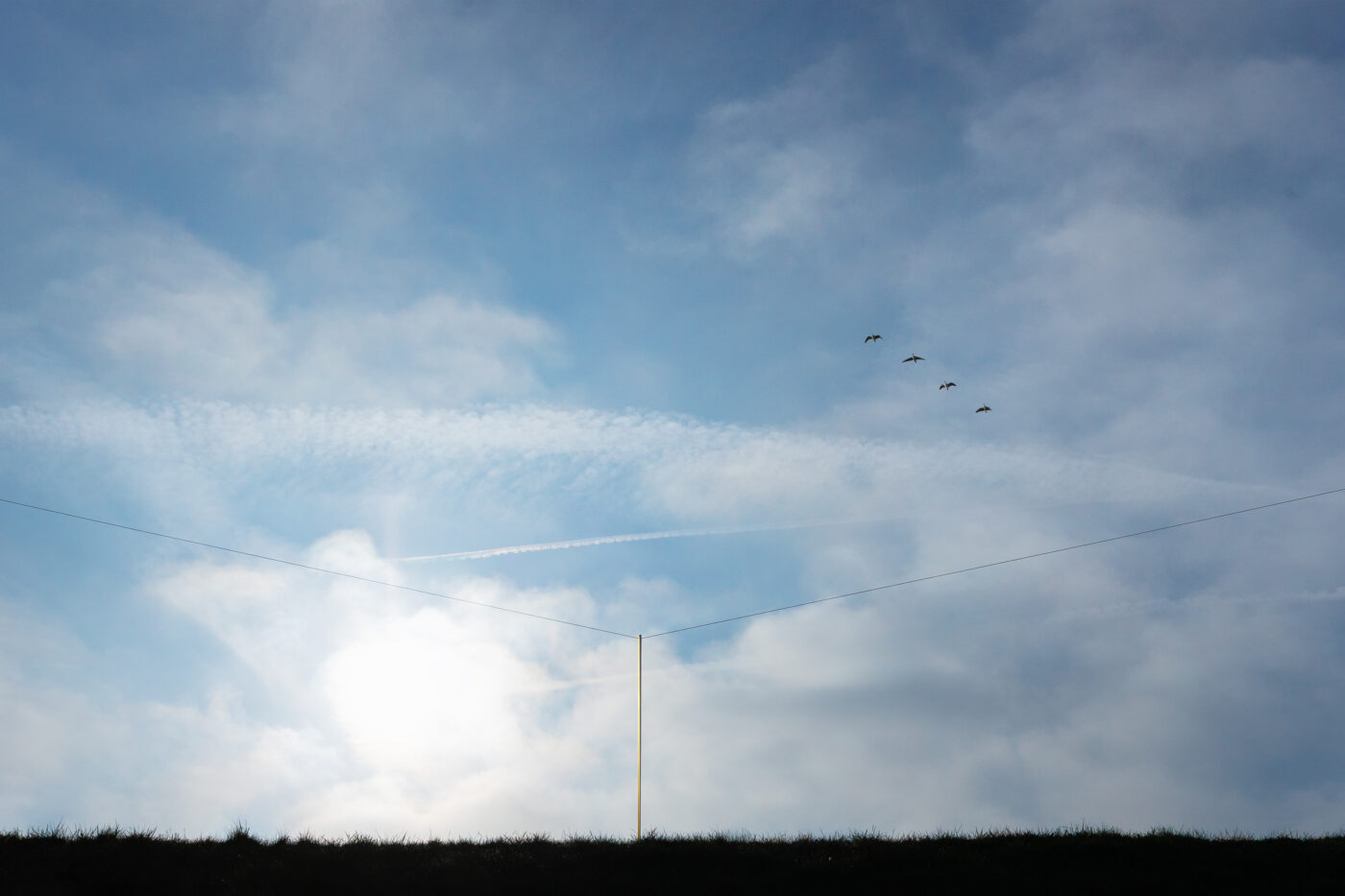
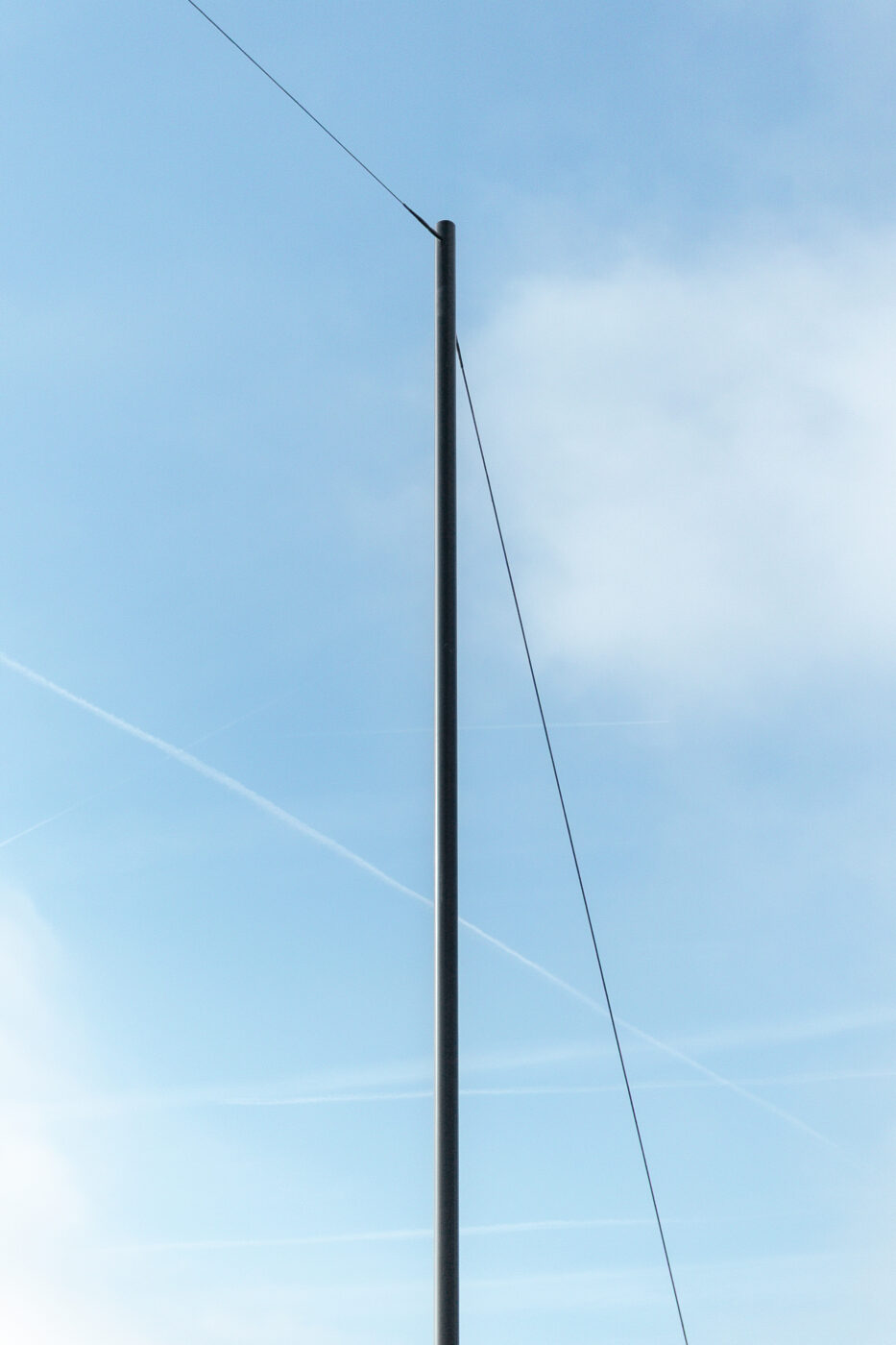
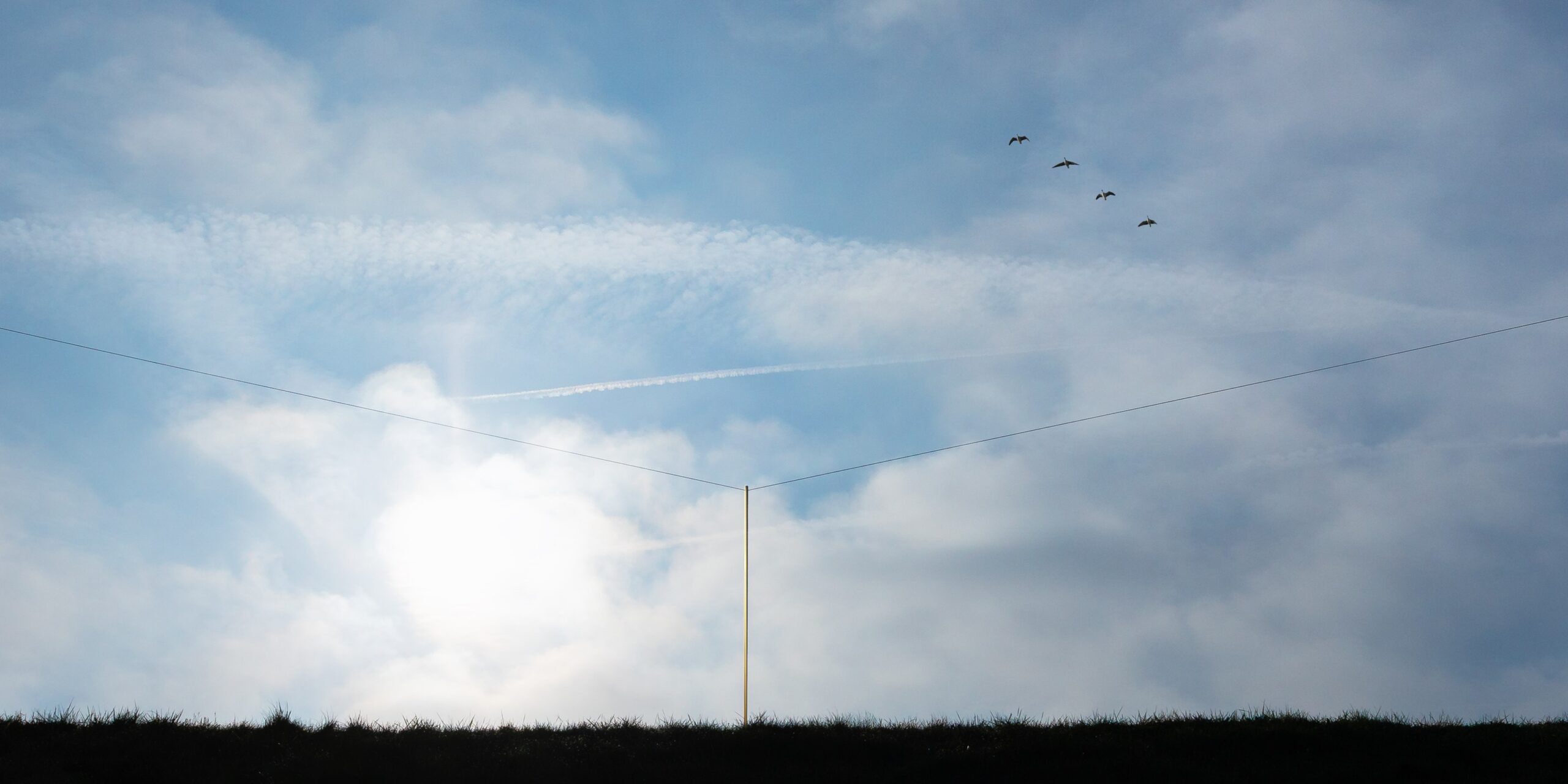
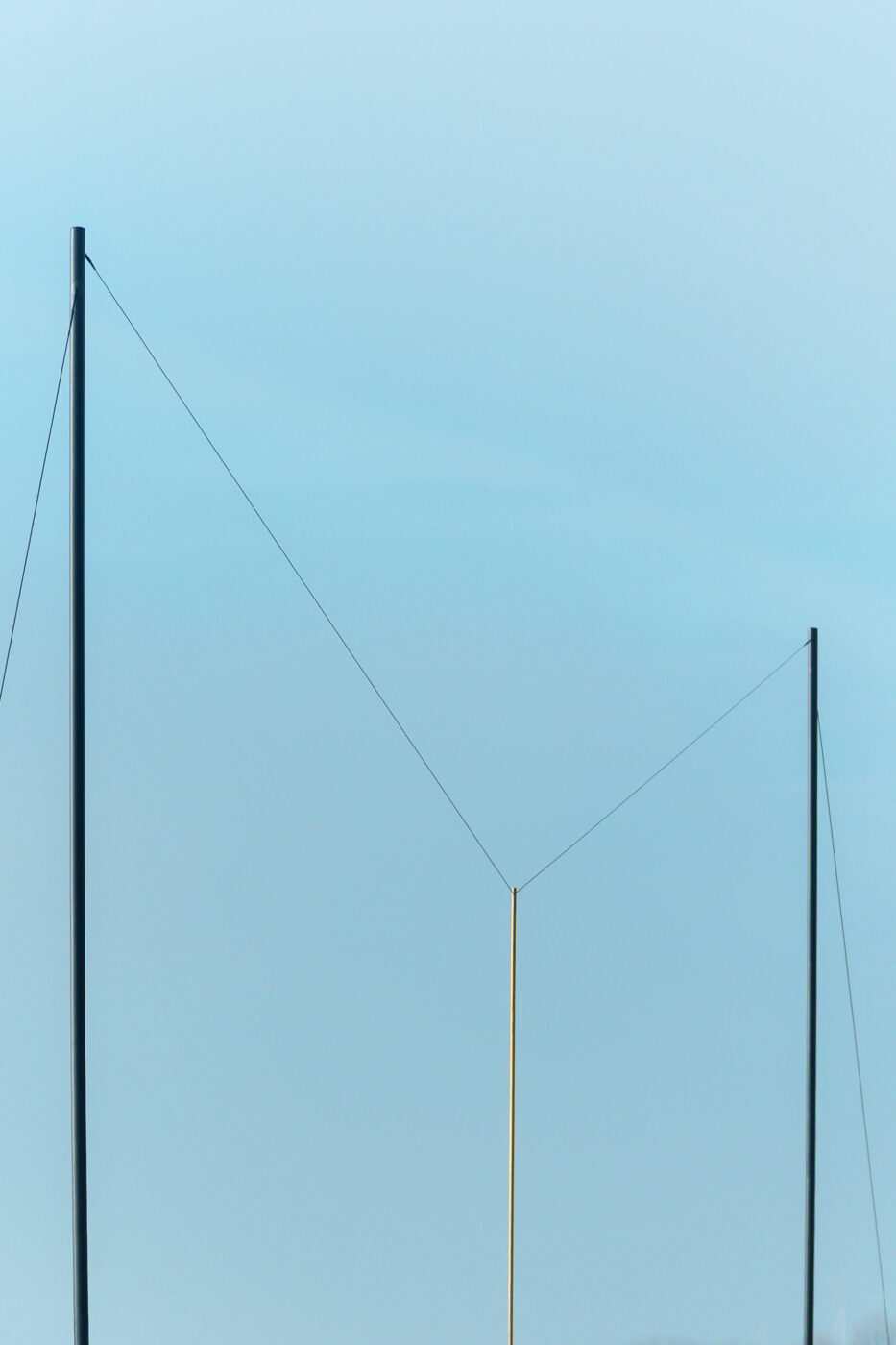
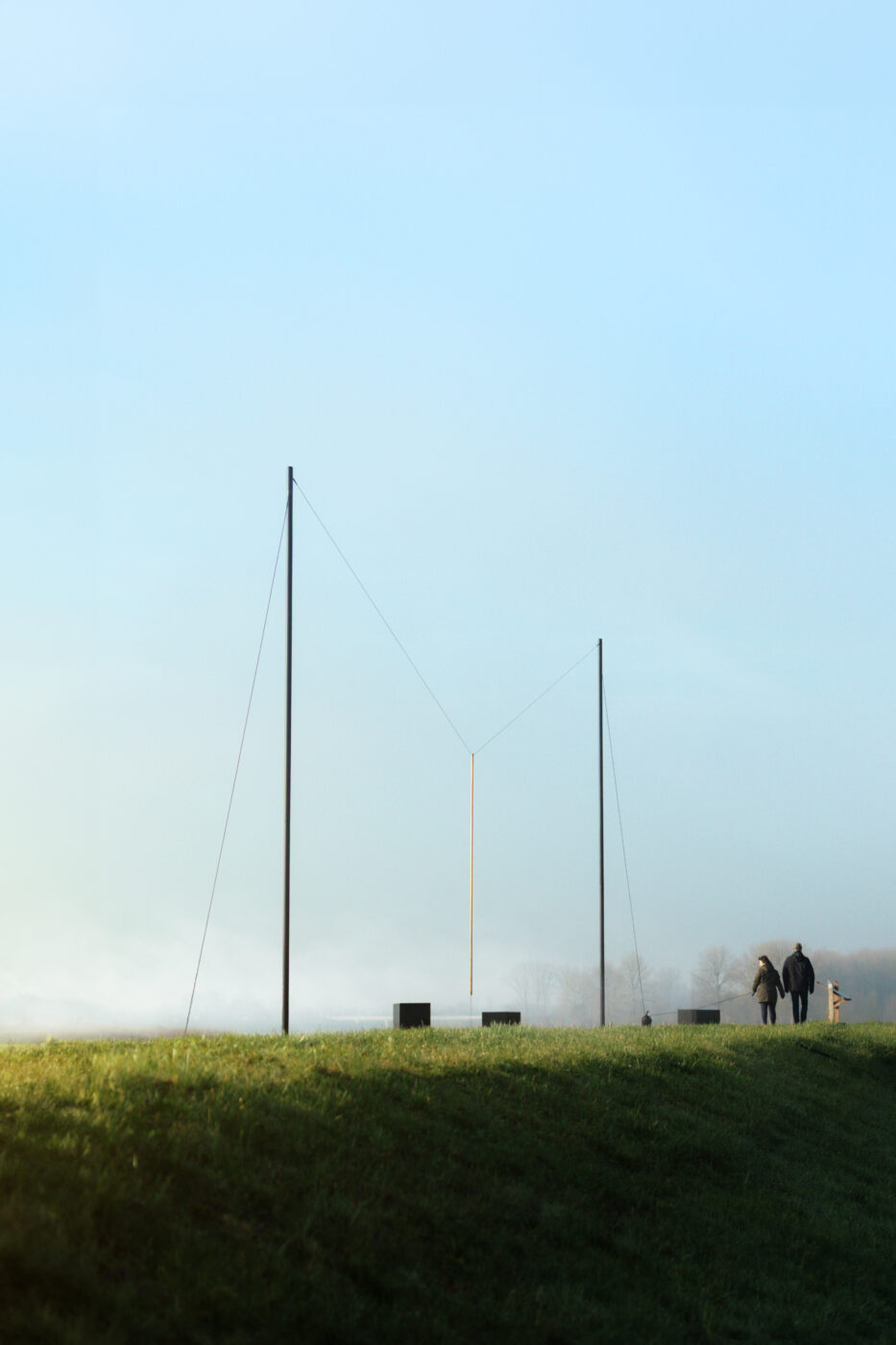
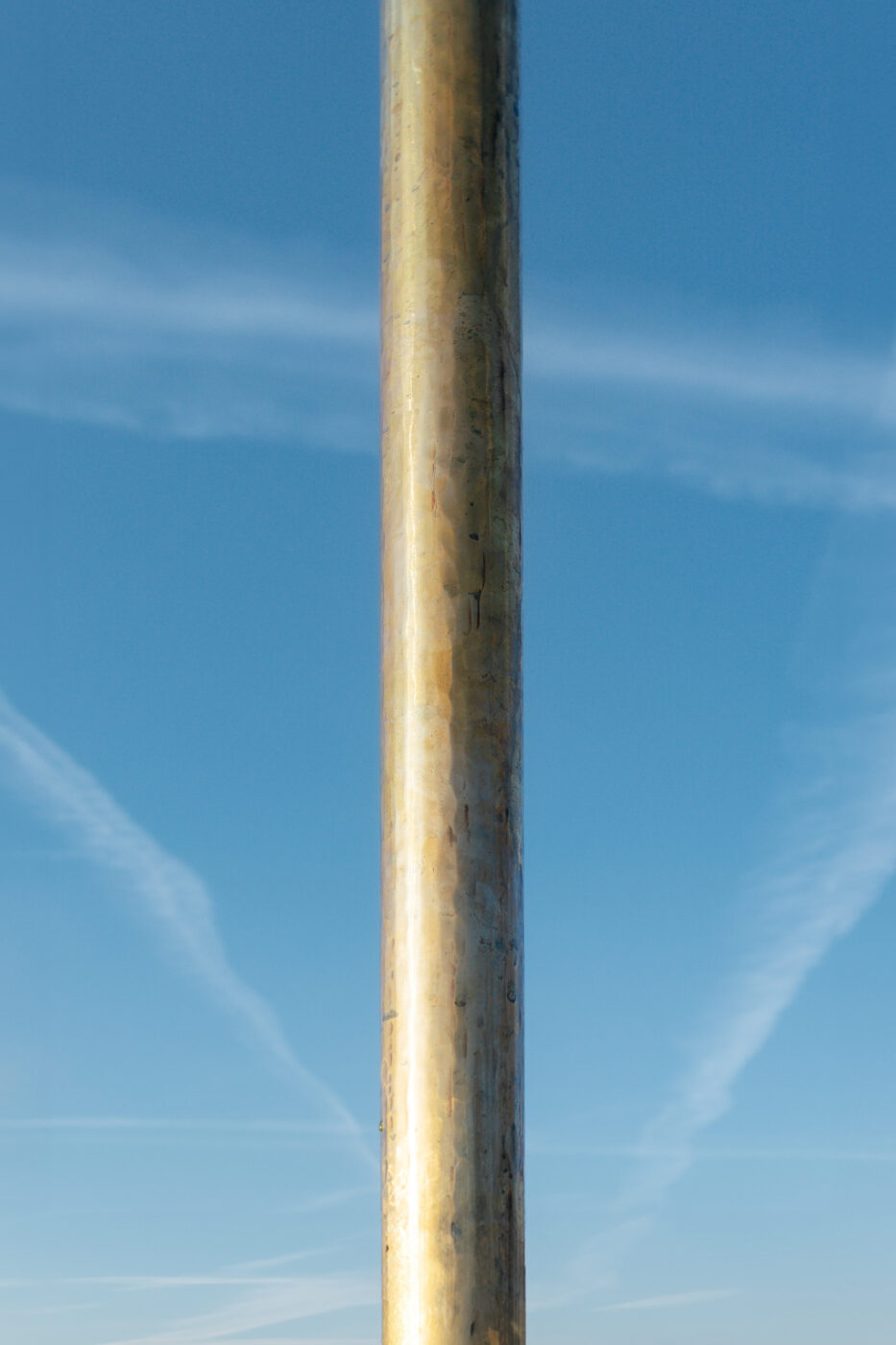
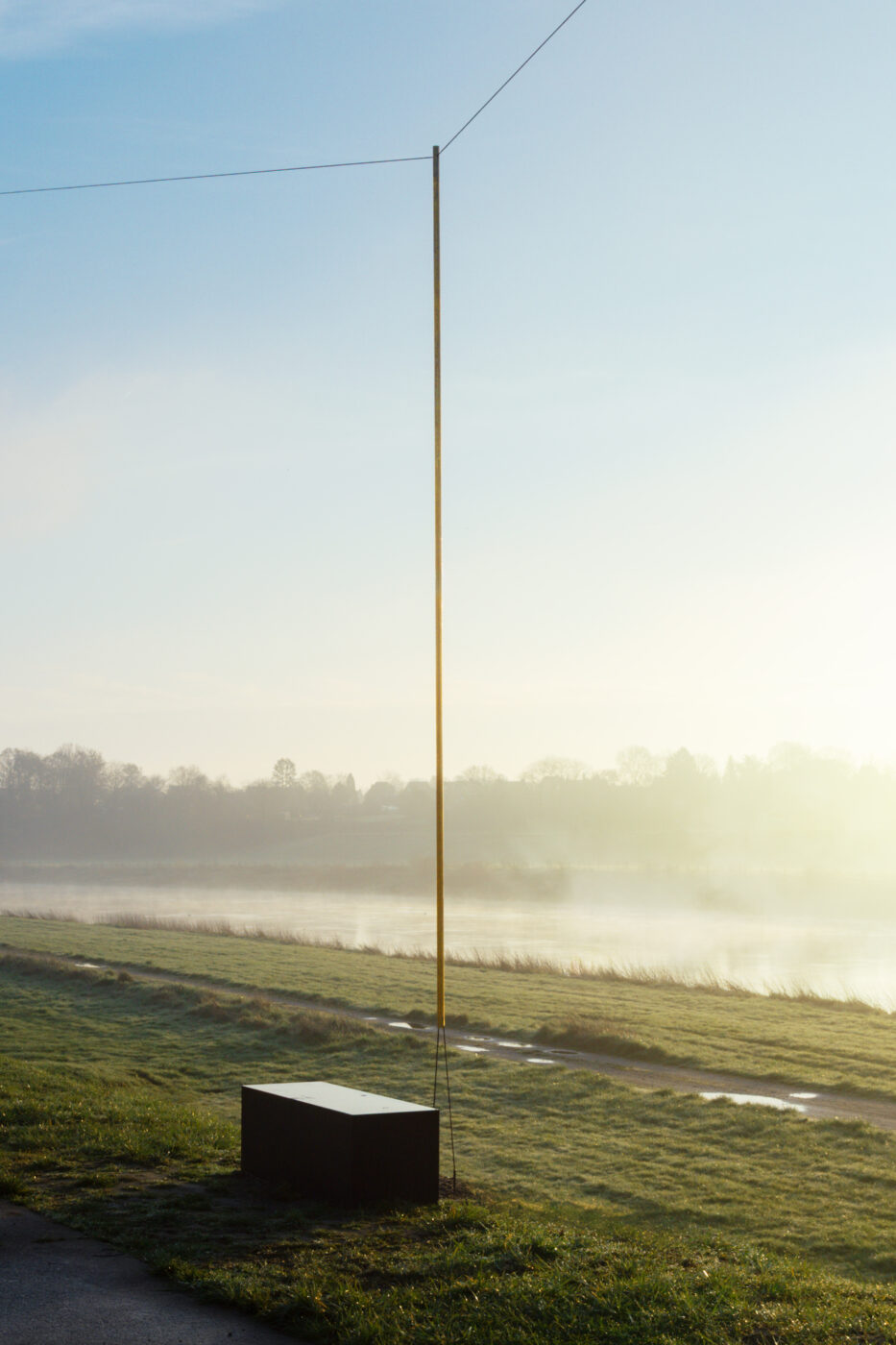
The sculpture consists of a five-metre-long vertical rod made of specially developed brass, suspended between two ten-metre-high poles standing 32 metres apart. This impressive scale is no coincidence: Reflection is not only Kruip’s first permanent sound sculpture in public space but also her largest to date.
The rod was custom-tuned by Thein Brass, a renowned workshop in Bremen. For this work, they developed a unique brass alloy, the exact composition of which remains a secret. The tuning was done using hammer blows, fire, and water – an artisanal process that produces a deep, sonorous tone. This meditative sound carries across the water like the echo of the bell that once announced the ferry’s arrival.
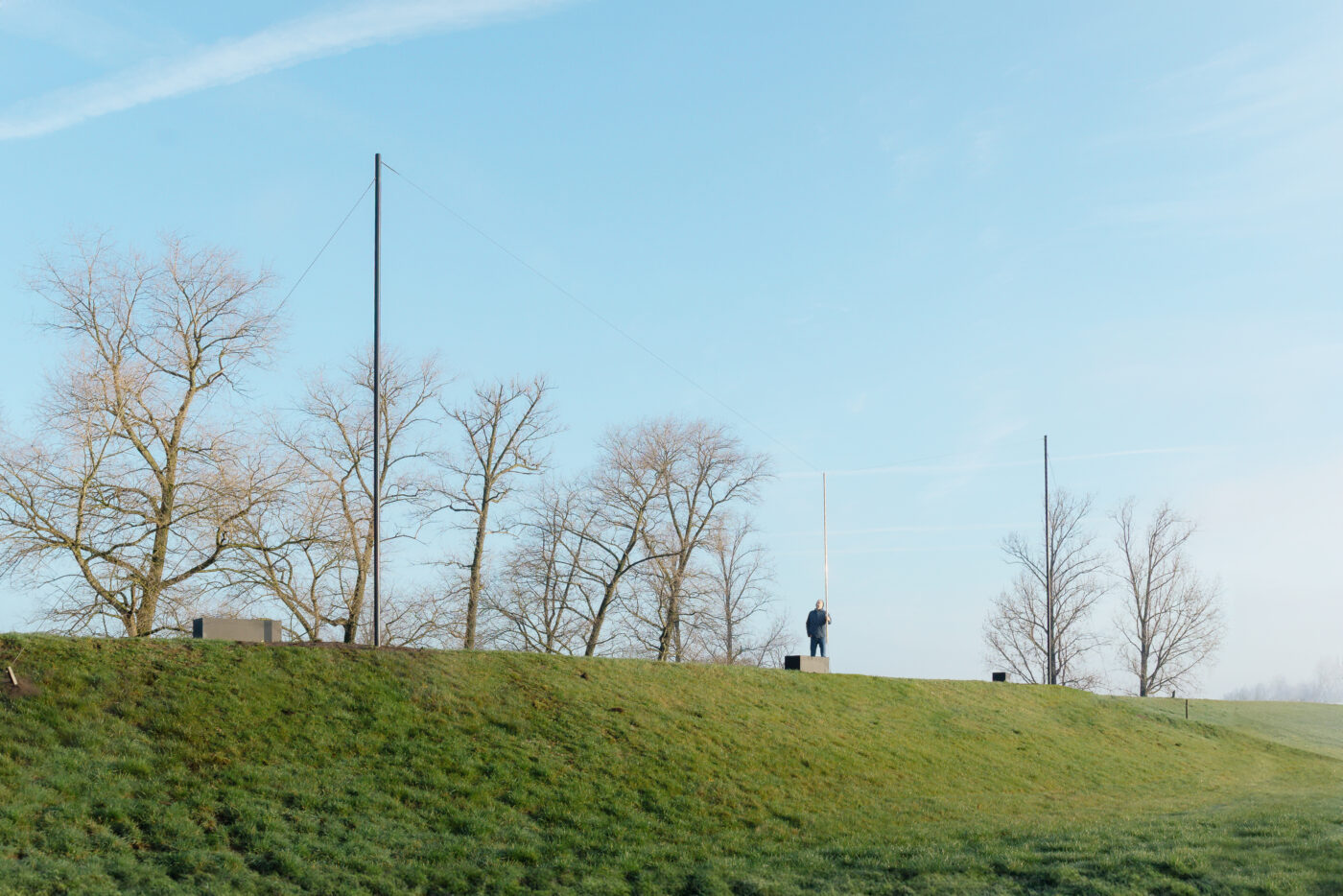
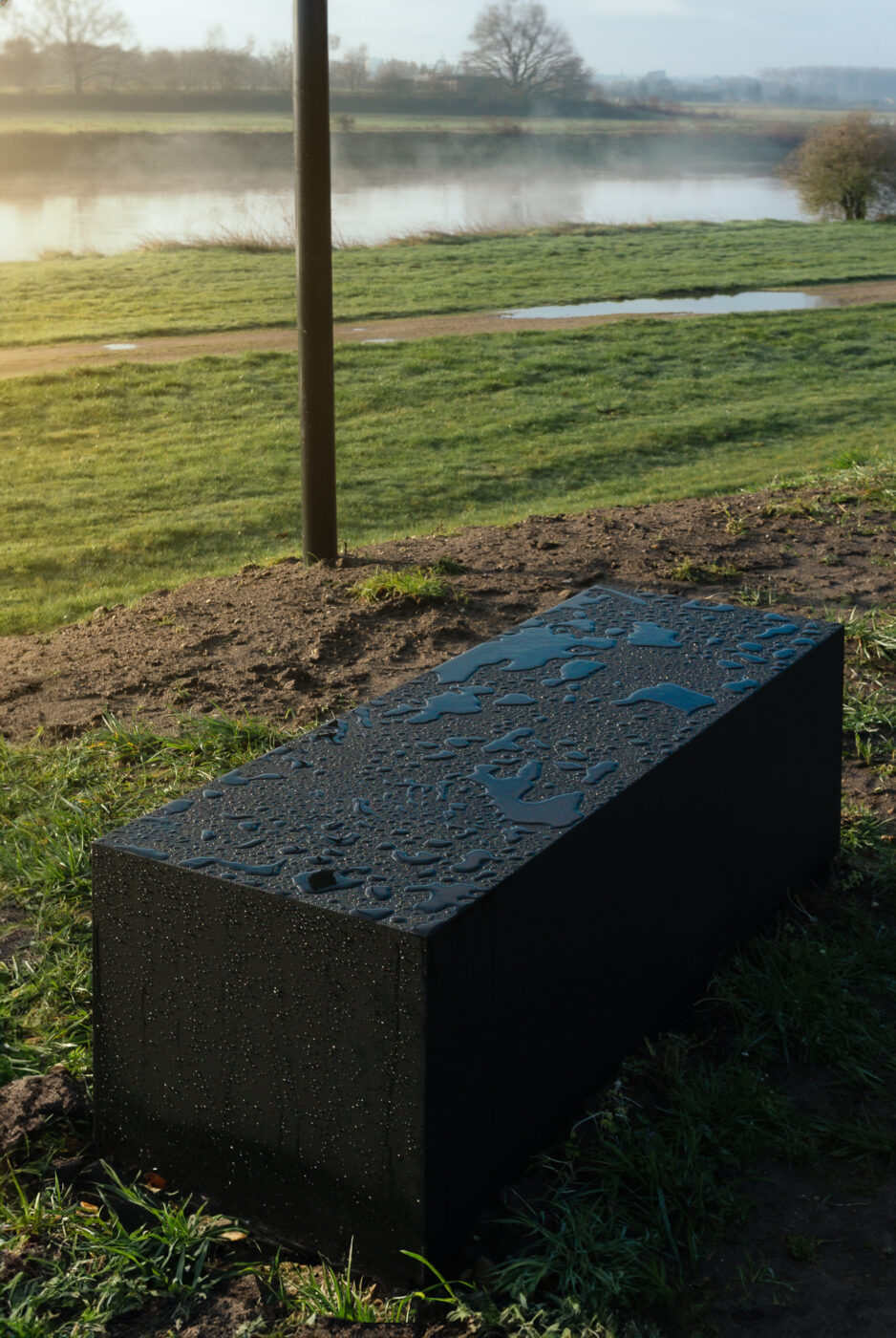
The landscape also played an active role in the design: the dimensions, orientation, and materials of Reflection are all adapted to the surrounding setting. Its slender forms and minimalist design ensure that while the work is monumental in its impact, it blends visually and subtly into the landscape. Three black granite benches invite visitors to sit down, be still, and listen.
Local input and intuitive choice
From the outset, Kruip worked closely with a local working group from Maasmechelen. During shared walks and bike rides, she explored this part of the RivierPark Maasvallei, intuitively identifying locations that appealed to her. It was only later that it became clear these were all current or former crossing points. This led to the idea of making this historic connection across the Meuse audible again – at the exact location where a ferry once operated.
“The place immediately felt right,” says Kruip. “Only later did I understand why. The artwork was born from that experience. The sound creates a connection that has physically disappeared, but is still present mentally and culturally.”
Art to look at, listen to, and experience
Reflection is not just an artwork to look at but also to interact with. The sound can be activated using a specially designed beater, as well as with natural objects – a stick, a stone, your hands. Each material produces a different tone, creating a new encounter each time between art, people, and landscape.
In addition, Musica Impulscentrum has developed an interactive workshop that allows participants to experience the landscape in a different way through sound, movement, and silence. The first sessions will take place this autumn.
The municipality of Maasmechelen has also ensured that the podcast series Stemmen aan de Maas (Voices on the Meuse) includes an additional episode dedicated to Reflection and the historic ferries.
From shore to shore
With Reflection, Maasmechelen gains an artistic landmark that bridges past and present. The sound resonates along the bank but can be heard on the opposite side – a subtle bridge between Belgium and the Netherlands. The possibility of placing a second version on the Dutch side is currently being explored.


About Germaine Kruip
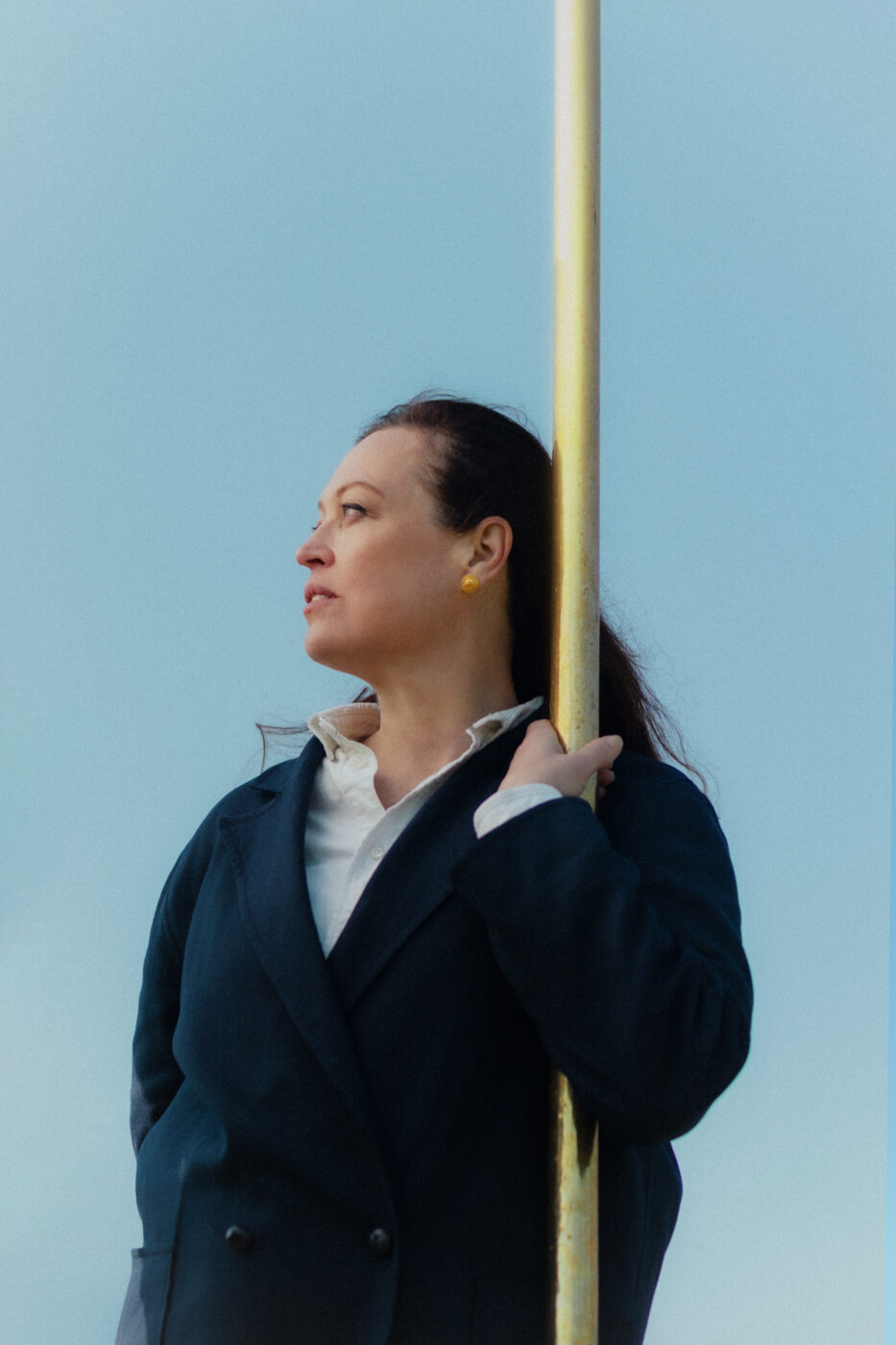
Kruip (°1970, NL) lives and works between Brussels, Amsterdam, and London. Her work has been shown at the Stedelijk Museum Amsterdam (NL), the Sydney Biennale (AU), Art Basel (CH), Frieze London (UK), Manchester International Festival (UK), the Puerto Rico Biennale (PR), São Paulo Museum of Art (BR), Hiroshima Museum of Contemporary Art (JP), Rotterdamse Schouwburg (NL), Kaaitheater in Brussels (BE), and the Experimental Media and Performing Arts Center in Troy, New York (US).
How to get there
The artwork is located between cycling junctions 50 and 56, along the dyke in Meeswijk (Maasmechelen), and can only be reached on foot or by bike. Visitors are advised to park at the village square in Leut. From there, it is about a 2-kilometre walk along a signposted route. The orange (10 km) and blue (5 km) walking loops of the Leut hiking area also pass by the artwork. Both loops start at the village square in Leut. Those who prefer a shorter route can park at the car ferry in Meeswijk. From there, it is about 1.5 kilometres to the artwork. On the dyke, simply follow the Kunst aan de Maas (Art on the Meuse) signage towards Reflection.
The town of Maasmechelen has produced a podcast entitled ‘Voices of the Meuse (in Dutch)’. Through fascinating conversations with local experts, residents and enthusiasts, you can learn more about the rich history, natural beauty and ongoing evolution of this majestic river in the Maas Valley River Park. A bonus episode was produced especially for Kunst aan de Maas, which you can listen to below.